Draft Annual Plan 2026 - 27
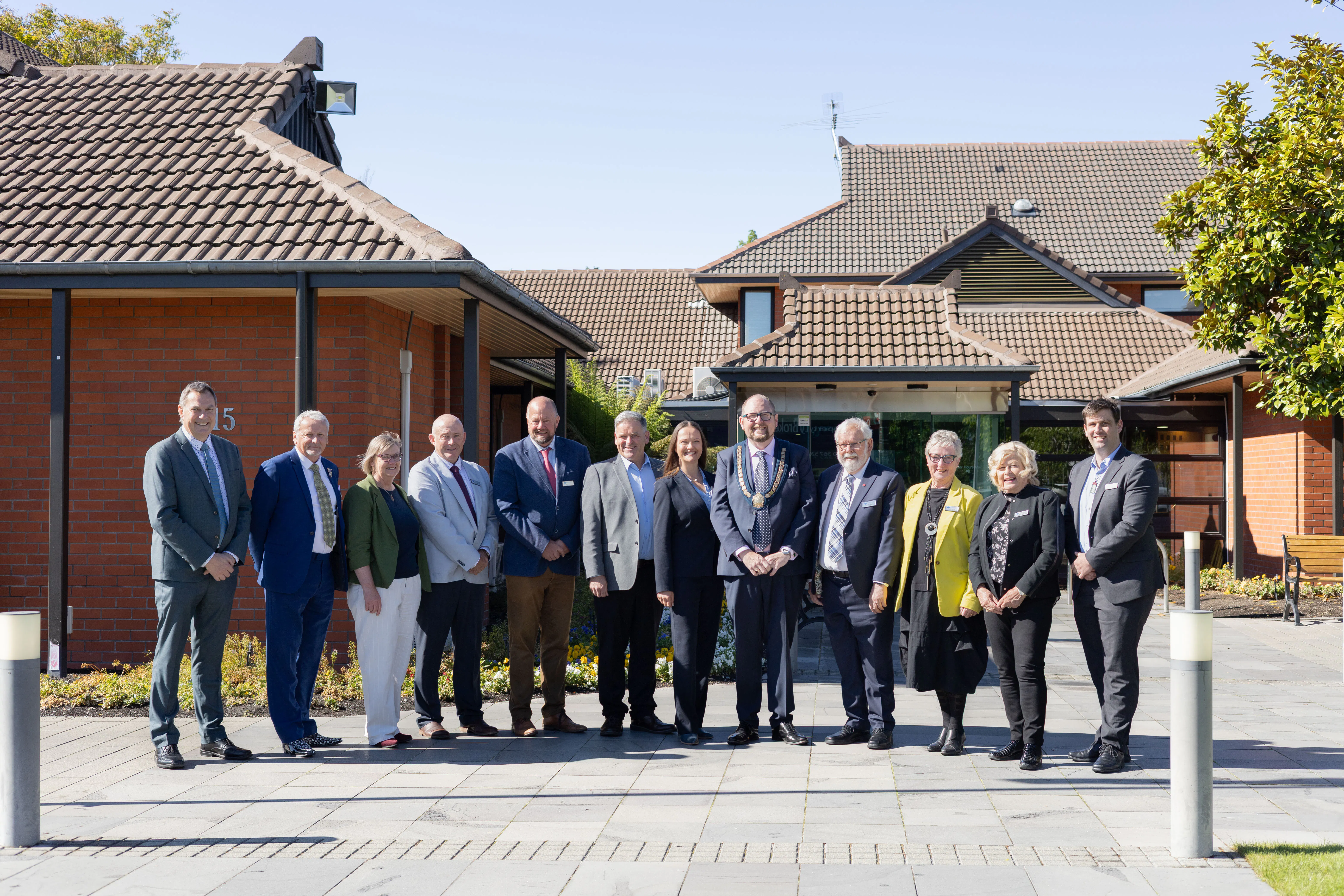
Kia ora Waimakariri
This Draft Annual Plan looks at the budget and work programme for the third and final year of the Long Term Plan (LTP).
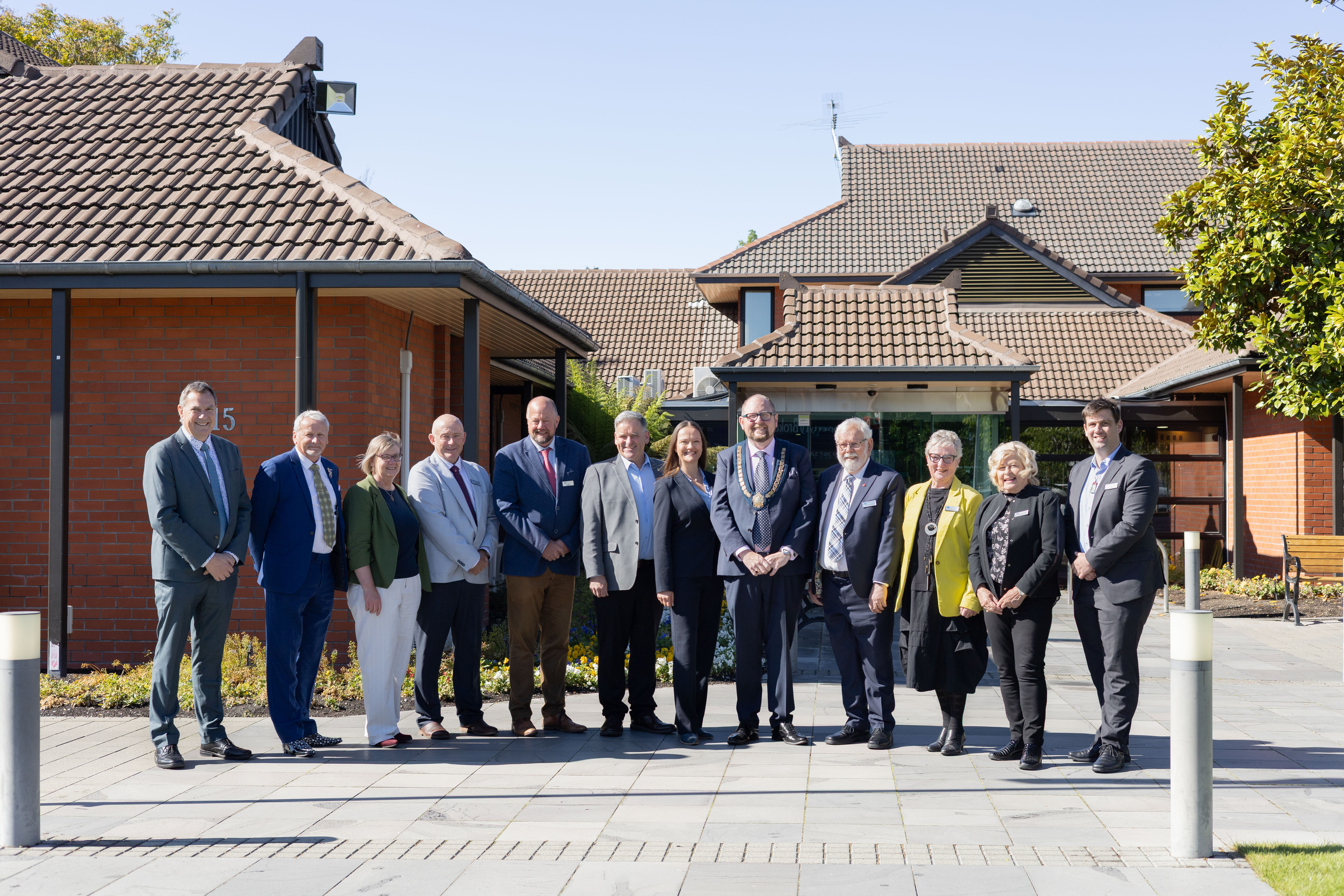
It takes place shortly after local government elections, and the new Council has been discussing our vision for the District, priorities, projects, and how these will positively impact our community this coming year.
Economically we are in a starkly different position to last year. The higher inflation environment seems to be behind us, and a more stable economic environment is here.
We recognise that things remain tight across the whole economy––especially at the householdContinue reading
Kia ora Waimakariri
This Draft Annual Plan looks at the budget and work programme for the third and final year of the Long Term Plan (LTP).
It takes place shortly after local government elections, and the new Council has been discussing our vision for the District, priorities, projects, and how these will positively impact our community this coming year.
Economically we are in a starkly different position to last year. The higher inflation environment seems to be behind us, and a more stable economic environment is here.
We recognise that things remain tight across the whole economy––especially at the household level. As a council we are doing our bit to tighten our belts when considering the budget for the coming year.
We have instructed staff to demonstrate fiscal discipline and carefully examine the programme of work so that only essential projects are progressed.
Waimakariri District Council is proud to have consistently had one of the lowest rate increases across the country over the last five years. This year is no different.
In fact, we have managed to set rates lower than was forecasted, with a 4.91% movement for an average property. What this looks like practically is an additional $8 per fortnight for an average home.
Looking across the sector there is a wave of reform coming local governments way (including rates capping, the Infrastructure Funding and Financing Amendment Bill, resource management reform, changes to emergency management, and more) which we will have to respond to.
Sadly, the past changes imposed by central government have resulted in additional responsibilities landing on councils without any increases in funding. This means ratepayers pick up the cost.
We will be strongly advocating on behalf of our ratepayers in our submissions on these topics, to highlight the need for appropriate central government funding to come with any new mandates.
It is important to the Council as we looked at budgets for the Draft Annual Plan that we stick to our programme and stay as close to what we signalled in the LTP as possible.
Our aim as ever is to focus on good quality local infrastructure, core services, and responsible rates increases.
Our Council is proud to provide exceptional services for the community and do so while regularly having one of the lowest rate increases in the country.
It’s important that we enable growth and development but balance this with affordable rates through prudent and responsible budgeting. Council’s financials are audited annually by Audit New Zealand and credit rating agency Fitch Ratings have confirmed the Council holds a strong AA Rating with a Stable Outlook. For context, this rating is on par with ANZ and BNZ banks.
As we move into the final year of our LTP our plan is in place, but we are still keen to get your thoughts on how we respond to central governments reforms, establishing our stand-alone in house water services unit, changes to our wider capital programme, as well as progress and a revised costing for the Rangiora Eastern Link.
We look forward to hearing from you. Please share your thoughts with us before 20 April.
Ngā mihi
Dan Gordon
Mayor
Jeff Millward
Chief Executive
-
Changes to Local Government
Share Changes to Local Government on Facebook Share Changes to Local Government on Twitter Share Changes to Local Government on Linkedin Email Changes to Local Government link
The coalition Government is making large scale changes to local government––the biggest shake-up in a generation. This is likely to change what functions and services we offer in the coming years, as well as how much we charge.Legislation changes include the Resource Management Act, changes to the role and shape of regional councils, the Building Act, Emergency Management system, development levies, and regulation around rates capping and how this is applied.
We will work carefully to understand any potential impacts on our community in terms of service provision as well as cost.
Reform is far from something councils wish to avoid–– in fact the sector has been calling for this for years. We look forward to working collaboratively with central government on these changes.
This is an exciting opportunity to improve how local government delivers planning, infrastructure, environmental management and public services to support our future prosperity.
Changes to Regional Councils
The Government has proposed to abolish regional councillors, replacing them with Combined Territorial Boards (CTBs) composed of Mayors.
The CTB will be required to work on Regional Reorganisation Plans to improve efficiency, strengthen collaboration across councils, and ensure decisions are made closer to communities.
They will have two years to submit re-organisation plans to the Minister for Local Government for approval.
One of the key reasons for this significant change is due to the planned replacement of the Resource Management Act (a core responsibility of regional councils) of which there is more detail below.
Submissions closed in February and a final proposal is expected in March.
Resource Management Act (RMA)
The RMA is being replaced by two new pieces of legislation: The Planning Bill, and Natural Environment Bill.
The Planning Bill aims to enable development and regulate land use, whereas the Natural Environment Bill manages resource impacts and protects the environment.
When it comes to the RMA or planning law generally, councils are the delivery mechanism for central government legislation.
The new Bills could reduce red tape, speed up development, and help deliver the infrastructure and homes communities across New Zealand need.
So, this aspect is welcome.
Recently we have adopted our new District Plan and are well advanced with spatial planning as part of the Greater Christchurch Partnership.
Waimakariri residents have strong views about development that negatively impacts our District. They strongly opposed development in Ohoka and landfills in Oxford and Loburn, and will want to see decisions already made taken forward.
Our Council has carefully reviewed the details and considered the implications for our District. However, the tight timeframe for submission meant we had to do without hearing the views of Waimakariri.
Our focus will be ensuring that any changes deliver practical benefits for our District. The legislation will go through a full select committee process in 2026.
Rates capping
The Government has also proposed a rates cap that would limit annual council rate increases to between 2 and 4 percent, per capita, per year with a phased approach starting in January 2027 and full implementation by 2029.
The cap will apply to all sources of rates but will exclude water charges and other non-rates revenue like fees and charges.
Councils will not be able to increase rates beyond the upper end of the range, unless they have permission from a regulator appointed by central government.
Waimakariri has had some of the lowest rates increases sector wide for the last six years and strives for efficiency and value for money. Unlike businesses, councils have to remain a going concern to support community and business with essential services for everyday life.
Adverse weather events as we have experienced add to costs above both general and local government inflation. And although we do our best to constrain costs it is not always possible.
Our concern is that linking of rates increases to the general inflation rate will put Councils on the back foot and either require us to borrow at much higher rates (to not reduce levels of service) or reduce our ability to fund the maintenance and replacement of assets over the longer term.
There is also the wider concern that much-needed projects such as the Rangiora Eastern Link may no longer be viable within this new limit.
The Infrastructure Funding and Financing Amendment Bill
This Bill aims to fix and expand the original Act which lets Special Purpose Vehicles (SPV) raise funds (via a long-term levy on ratepayers) to pay for infrastructure that supports urban growth.
The goal is that ‘growth pays for growth’ by accelerating infrastructure delivery for housing/urban development, making it cheaper and faster while ensuring beneficiaries (like new property owners) mostly cover the costs over time.
Our role under this Bill is as the collection agent for levies to avoid the SPV having to set up its own billing system––while keeping the funding/financing and debt off the Council’s books.
This differs from the usual where councils pay for infrastructure ahead of growth taking place, and then charge development levies to cover costs, which increases the debt on Councils books and often bills for ratepayers.
The Council supports the intent of the Bill and is supportive of unlocking growth. However, we have concerns about how the Bill doesn’t allow for certainty of infrastructure costs over time, believe only new properties should be subject to levies, and want to have parity with how infrastructure endorsements are made, among others.
We also believe the Bill needs to be clear that levies are not subject to rates capping. Submissions closed on this topic on February 20 and the Bill is expected back before parliament in the coming year.
Development levies
The Government’s ‘Going for Housing Growth’ programme will replace development contributions with a levy system to better fund housing infrastructure. Under this approach:
• Developers pay a proportionate share of growth infrastructure costs across levy areas using a standard method
• Levies cover core services: water, wastewater, stormwater, transport, and community facilities
• A regulator, likely the Commerce Commission, ensures consistent application
• The new system is designed so that “growth pays for growth”, reducing reliance on existing ratepayers funding growth projects.
Legislation is expected mid-2026, with phased implementation from 2027.
To stay up to date on these reforms visit - https://www.waimakariri.govt.nz/council/local-government-reforms
Waimakariri’s view
Our Council sees these reforms as an exciting opportunity to update the local government system to be more efficient and reflective of the needs of our community.
As always, our focus is on the needs of Waimakariri and making sure local voices are heard and understood by decision makers.

These proposed reforms look likely to significantly change the function and shape of local government and service provision.
However, what they don’t address is how any new responsibilities will be funded.
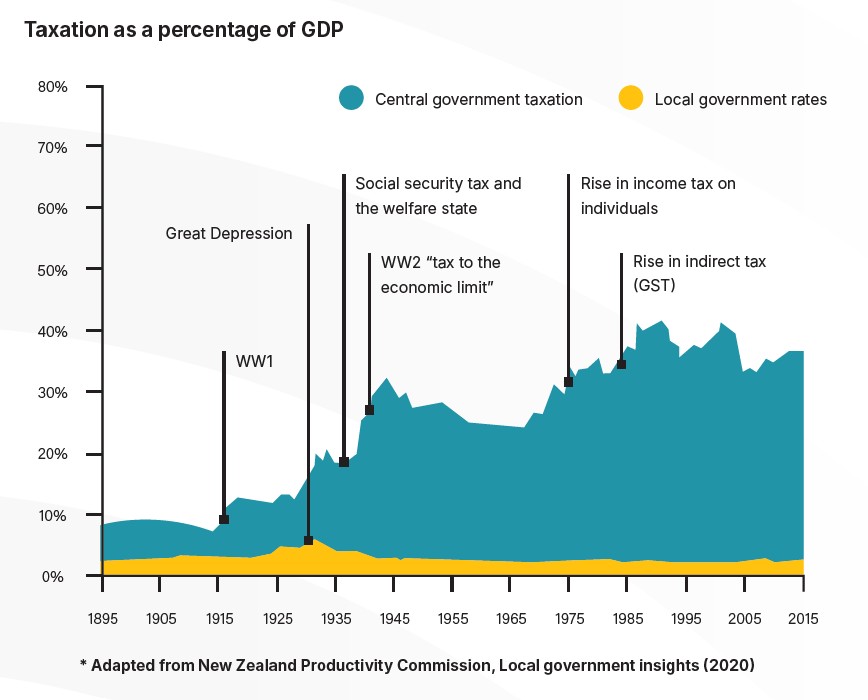
The reality is that most local government income comes from rates. Any reform needs to also provide new funding avenues from central Government to address New Zealand’s national infrastructure deficit and more fairly spread the tax take across communities.
Over the years, successive government reports have confirmed that local government funding and financing requires change. It simply is not sustainable to rely on rates alone.
Local government has been pushing for new tools such as the Crown paying rates for the services they use, as well as the GST charged on rates being returned to councils.
These alone would provide a huge relief to ratepayers while allowing Districts to thrive. The only requirement being that central Government pay for the services they use––just like households. The Government has committed to other new tools, including city and regional deals, GST sharing on new housing, and a Regional Infrastructure Fund.
However, we are yet to see how these could or will be applied to our District and what it will mean for ratepayers.
With such large-scale reform our concern is that any proposals could come at the expense of local accountability. One thing Council is certain of, and we have seen it with Three Waters reform, is that our communities are well informed.
Whatever change comes about, wholesale amalgamation is not something our Council supports, and we will work hard to make sure our community doesn’t lose the things that residents value.

-
Local Water Done Well
Share Local Water Done Well on Facebook Share Local Water Done Well on Twitter Share Local Water Done Well on Linkedin Email Local Water Done Well link
Waimakariri was one of the first councils in the country to gain approval to establish its future structure for water services under the government’s Local Water Done Well legislation.
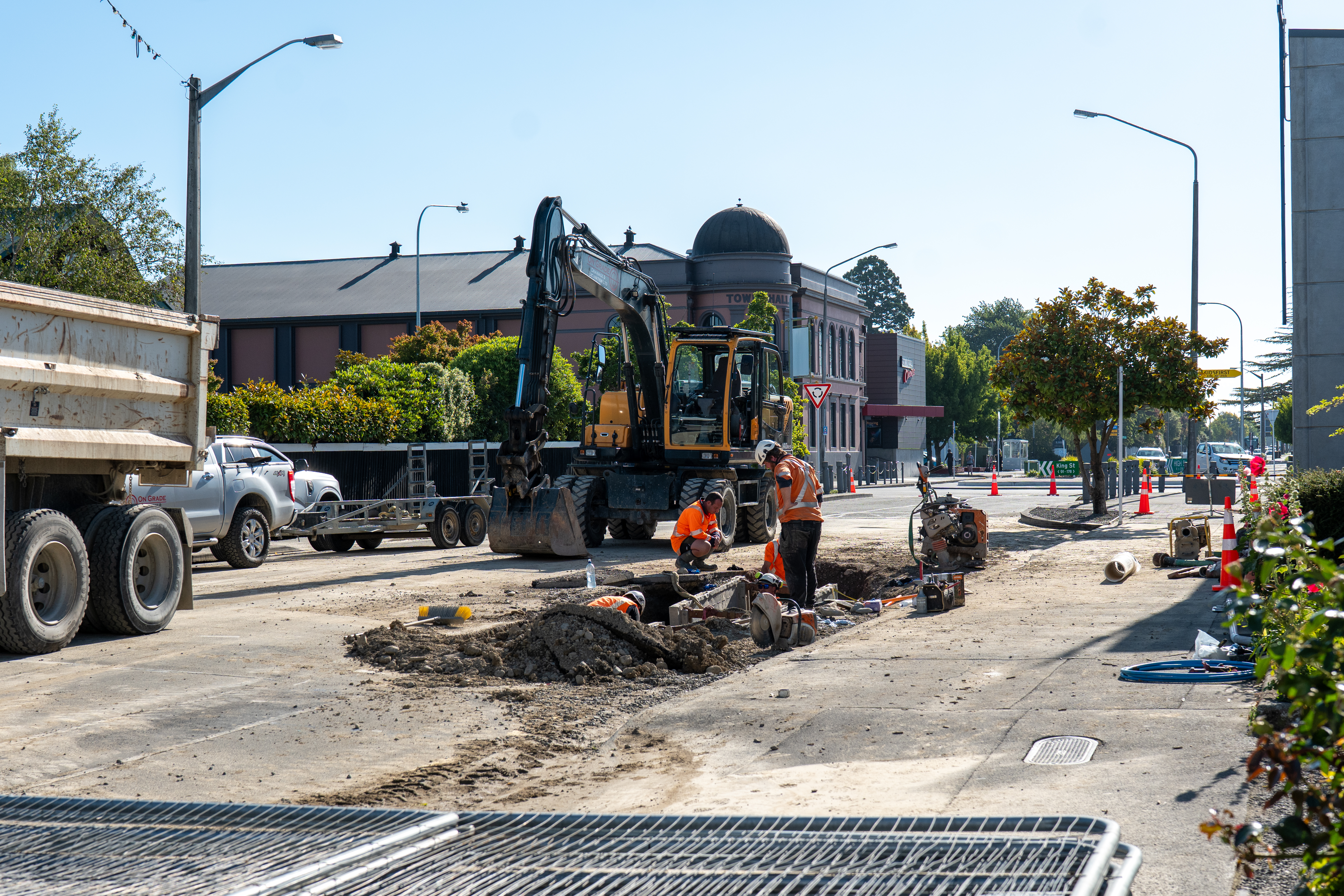
Our Council strongly advocated for local ownership and say. In fact, we led the formation of Communities 4 Local Democracy (C4LD), a coalition of around 30 councils advocating against the previous reform proposal which wanted to establish four mega water entities across the country and remove ownership and say from communities.
C4LD put forward an alternative reform model that emphasised local say and ownership, while being agile enough to meet higher regulatory and financial sustainability standards. This policy formed the basis of Local Water Done Well––the reform proposal adopted by the new Government in early 2024.
Under this new legislation Council consulted on options for delivering water services as part of its Annual Plan between 14 March and 21 April and Council received 764 submissions on the topic. Over 97.2% were in support for Council’s preferred option to establish an internal business unit to manage water.
Over the last 20 years Council has invested over
$100m in water infrastructure to ensure it is of the highest quality and standard and has a 150 year infrastructure strategy to fund these assets to ensure it stays this way.
Council water-related assets together have a value of $1,103m, and a further $112.7m is already in our LTP to support drinking water safety upgrades, improve wastewater treatment infrastructure, and address flood risk.
Because of this, modelling of future costs has shown that in the first 10 years the best model for Waimakariri is an internal business unit.
This provides certainty for the community and through a business unit we retain effective control and influence, which is what is important to the community.
Cost projections show Waimakariri is in the lowest three of council’s looking at cost increases by 2034 for water provision. Our costs, including an allowance for inflation, are expected to increase by 31%. Comparatively the worst-off Council expects costs for water to increase by 252% for this same timeframe.
Our ratepayers benefit from our management and investment to date, as well as our fighting for local say and ownership.
Over the next 12 to 24 months Council will establish our internal business unit for water, ensuring our Water Services Unit is aligned with the new legislation and meets the financial requirements.
We look forward to continuing to deliver local water for Waimakariri.
-
Rangiora Eastern Link (REL) Update
Share Rangiora Eastern Link (REL) Update on Facebook Share Rangiora Eastern Link (REL) Update on Twitter Share Rangiora Eastern Link (REL) Update on Linkedin Email Rangiora Eastern Link (REL) Update link
If you’ve driven through Southbrook, you will know the frustration of gridlocked traffic and growing congestion.
As the District’s population continues to grow, Council needs to invest in essential infrastruc
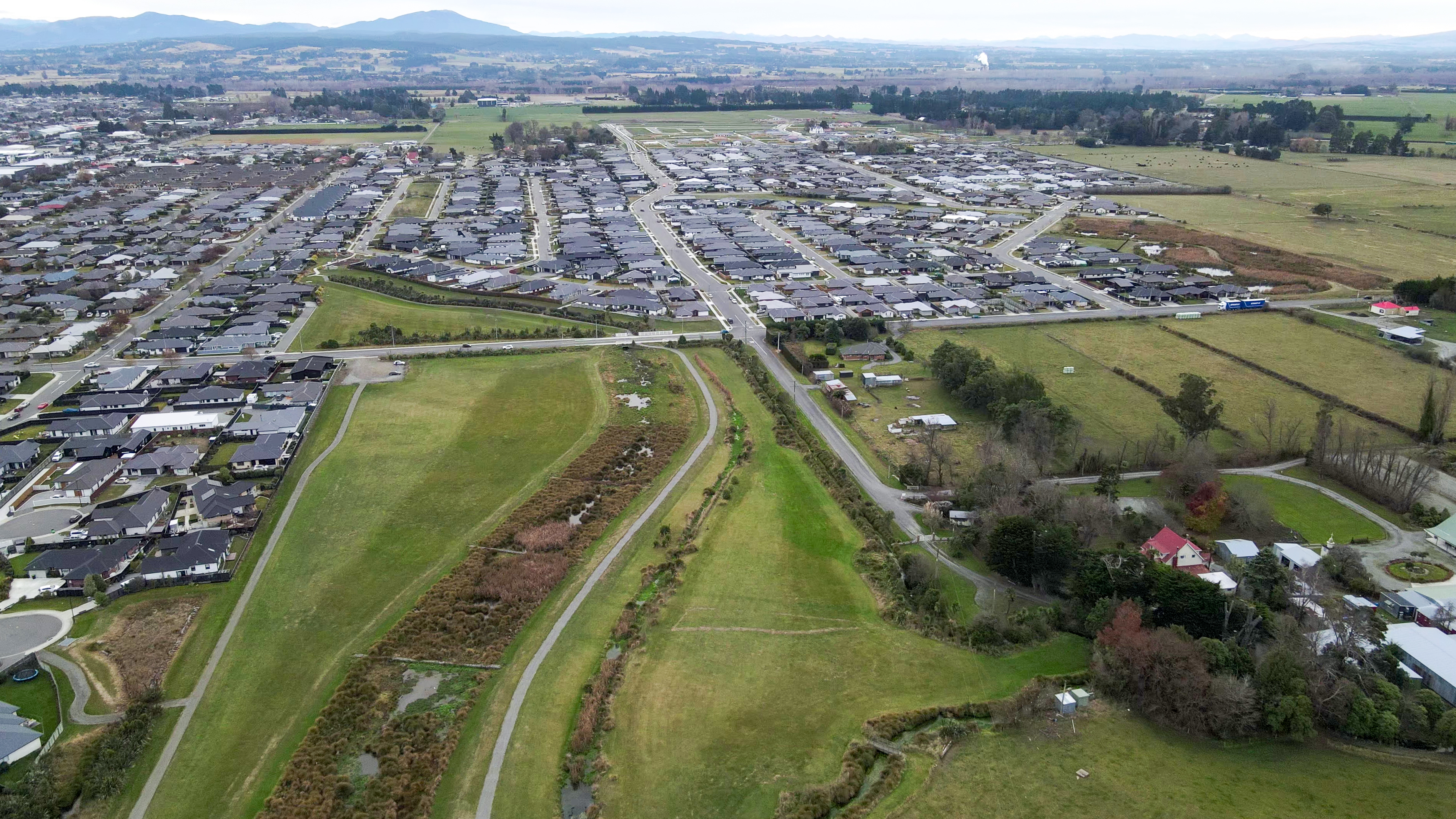
ture like roads to keep our residents and businesses moving, support new development, and enhance everyday life.This congestion will spread as our District grows.
Already over 5,000 new homes are planned in East Rangiora alone. And currently, Southbrook Road carries over 23,000 vehicles per day, leading to severe congestion, safety concerns, and inefficient freight movement.
The REL project is vital for Rangiora and wider Waimakariri. It will:
- Transform congestion in Southbrook by providing an alternative route for Rangiora
- Unlock development opportunities, boosting local jobs and housing
- Create a reliable alternative link to State Highway 1, improving safety and resilience during disruptions.
Local roads in New Zealand are funded through a partnership between central and local government.
The “local share” is paid via rates, development contributions (from new housing) and Council borrowing, with the “government share” coming from NZTA via the National Land Transport Programme (NLTP).
This means that ratepayers will be funding about 25% of the total cost of the project.
When we last engaged in the 2024 Long Term Plan residents supported the development of the REL road for these reasons.
Last year the REL and supporting eastern projects were given a Stage 1 endorsement from the New Zealand Infrastructure Commission, Te Waihanga.
In its independent assessment released in December, the Commission recognised the significance in tackling congestion, improving safety, and unlocking future growth in the east of the Waimakariri District. It endorsed addressing these issues as a priority problem for New Zealand.
While the Commission’s endorsement doesn’t guarantee NLTP funding, and requires additional steps before considering the project investment ready, it adds considerable weight to the Council’s case when it bids for construction co-funding in the next NLTP.
Staff have been progressing the project, and the Council is close to completing the Business Case and design. Because of this we now have a much better understanding of what the project is likely to cost than three years ago.
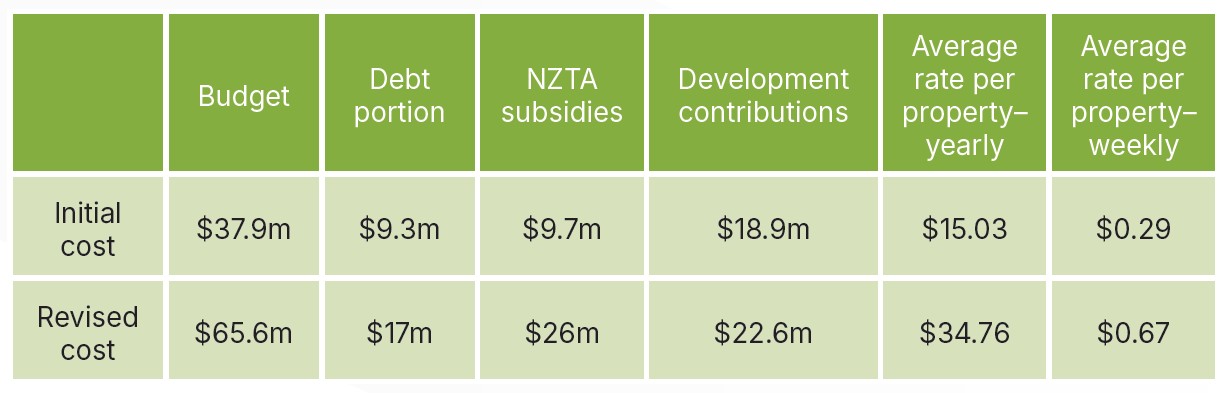
We have done value engineering and now expect the total cost of the road to be approximately $65m––higher than the initial estimate of $37.9m.
This adjustment reflects real-world factors like inflation, materials, and engineering considerations.
While, NZTA have not yet approved the construction funding of the project, it is important our community get to see updates and new considerations as they happen and can comment on the changes.

Because of this, the change in cost is not yet included in the rates rise this year. If the project achieves co-funding from NZTA, next year would see the process commencing to get things ready for construction in 2028.
Although it would not affect rates until the following year, Council intends to include $5.6 million to cover design, property, and other costs in this Annual Plan if commitment from the government is secured.
For ratepayers, the revised cost would deliver a connector road that would reduce congestion, improve travel times, enable development, and increase the resilience of our transport network.
The cost works out to be less than 70c a week per household - which you would easily burn in fuel sitting in traffic. The REL is critical infrastructure, and an investment in our District.
To defer construction will only see costs increase and given the financial impact on ratepayers remains low, the view of the Council is that the project should proceed.
The Council’s Long Term Plan currently shows the project being delivered in 2028 and 2029. This is subject to receiving funding from the Government’s NLTP, which may mean the work is brought forward or delayed depending on funding availability.
To find out more and stay up-to-date on this project visit - https://www.waimakariri.govt.nz/council/major-projects/council-projects/rangiora-eastern-link
-
Capital Programme
Share Capital Programme on Facebook Share Capital Programme on Twitter Share Capital Programme on Linkedin Email Capital Programme link
Each year the Council budgets to upgrade and replace critical community assets and infrastructure such as water and sewer pipes, treatment plants, drains, and roads.
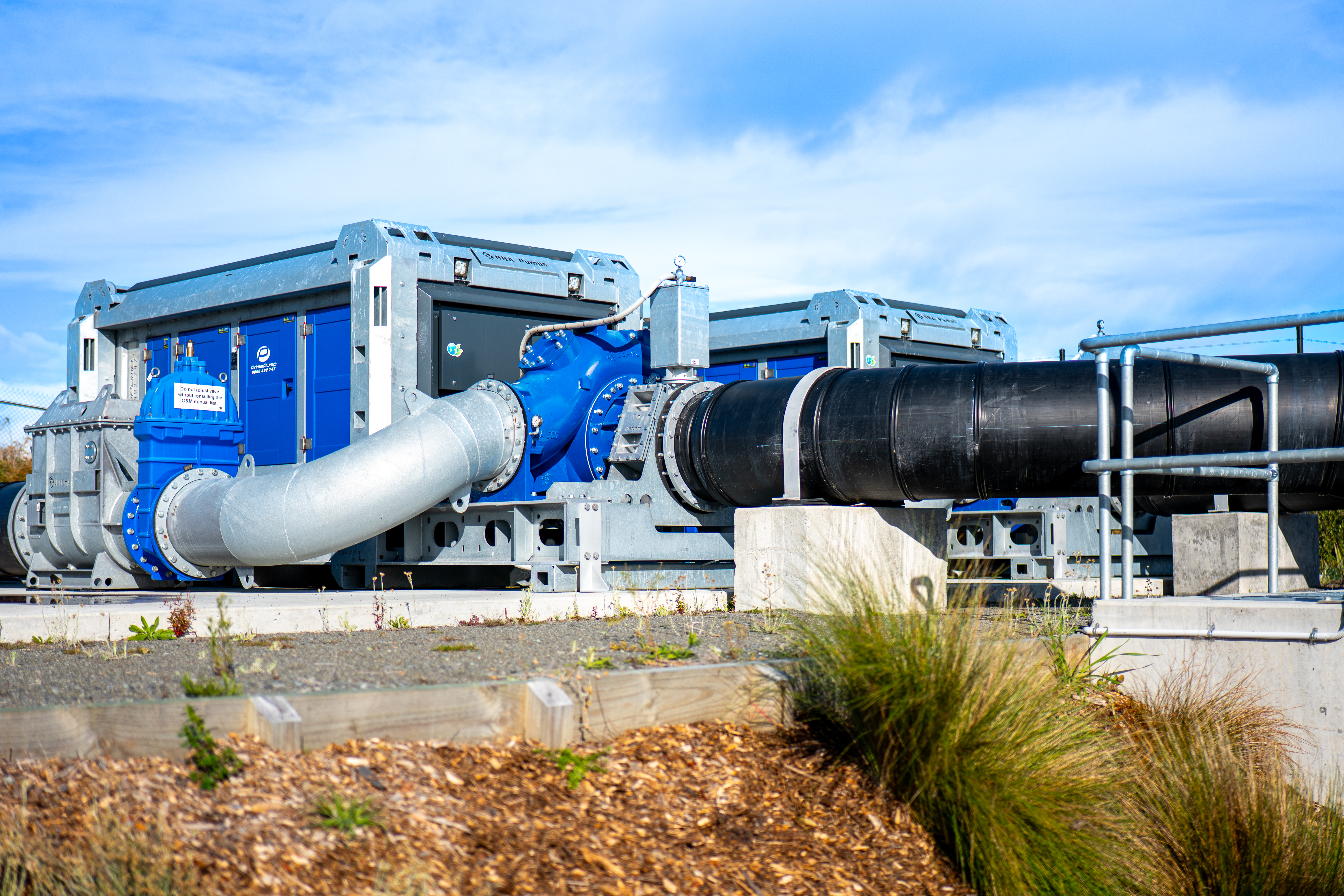
As our population grows we allow for increases in demand. In some years this has resulted in there being projects not required but that remain budgeted for. Council has asked staff to rejig the approach to our capital programme to allow for this in more realistic timeframes that matches growth and timing of capital works.
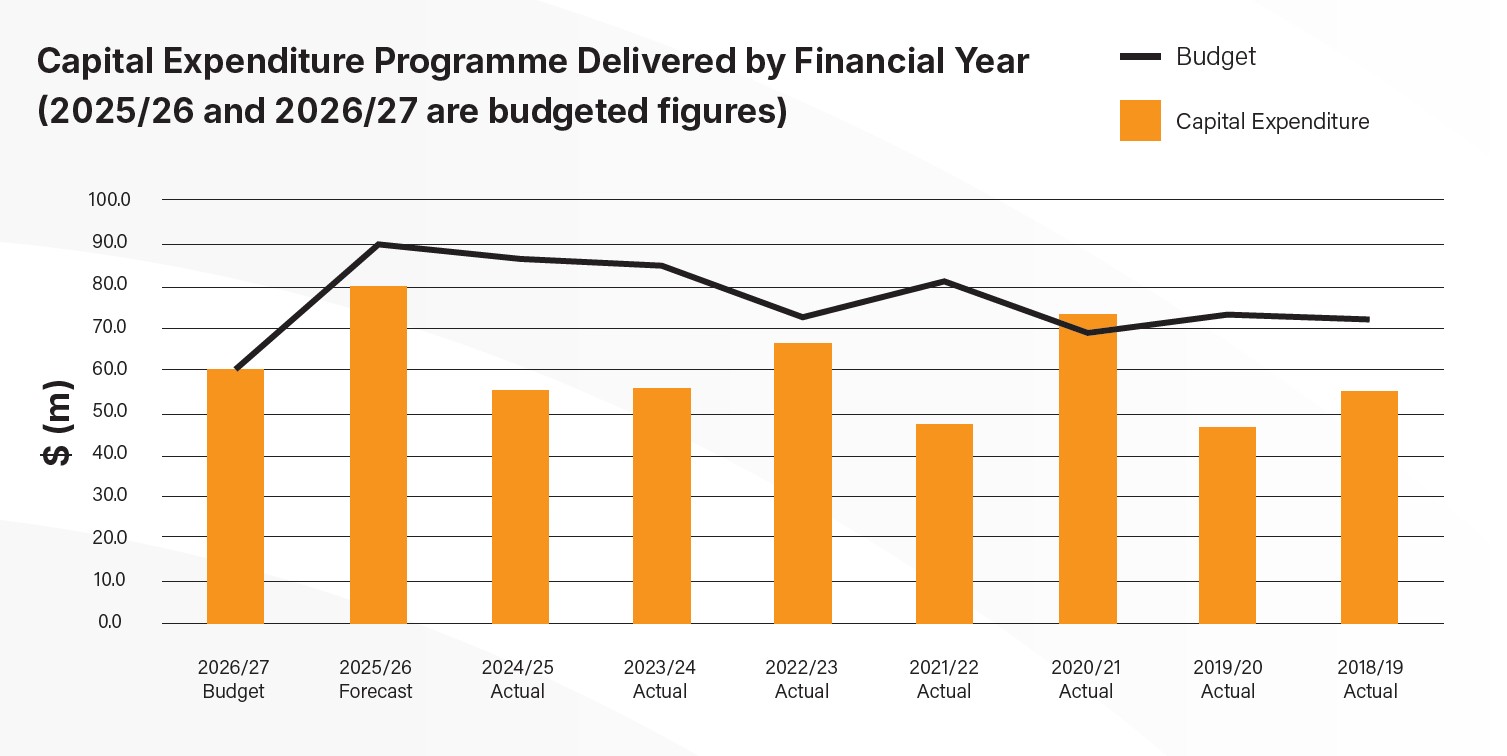
In 2023/24 and 2024/25, the council delivered about $54m each year in capital works.
For 2025/26, the budget is $72.7m, but an under-spend of $11.5M is predicted, leading to $22.5m carryover.
If the budget remains unchanged, 2026/27 would introduce $73m new budget, plus carryover, totalling $95.5m, which is unrealistic given past delivery capacity.
Council is wanting to reduce the 2026/27 capital works budget to about $61m (instead of $73m) to align with realistic delivery capacity achieved in the 2023/24 and 2024/25 years.
Council thinks this is an achievable target longer term and it is timely to revisit the programme and budget for capital works given underspending in some years has resulted in some carry over budget.
There is little to no risk in this approach, as it brings Council’s capital programme into a more realistic delivery timeframe and appropriate budget.
What this does mean is that some projects will be delayed and careful consideration will need to be made about which projects get put to the top of the list.
The following is proposed as a criteria for how projects will be prioritised:
- Statutory compliance and consenting requirements
- Existing commitments to community groups, contractors, and council
- Projects with external funding at risk (e.g. NZTA subsidy)
- Work that smooths contractor workload
- Projects already advanced in design.
Projects may be deferred if:
- Public consultation hasn’t started
- Land purchase or consenting hasn’t progressed
- Design work is insufficient for completion in 2026/27.
This approach rejigs our budgets to ensure our work programme remains achievable, while ensuring the budget focuses on deliverable, high-priority projects.

Who's Listening
-
Phone 0800 965 468 -
Phone 0800 965 468 Email helene.street@wmk.govt.nz -
Phone 0800 965 468 Email alistair.gray@wmk.govt.nz
Lifecycle
-
Open
Draft Annual Plan 2026 - 27 is currently at this stageThis consultation is open for contributions. The opportunity to provide feedback closes on April 20.
-
Hearings
this is an upcoming stage for Draft Annual Plan 2026 - 27Hearings will take place on 6 and 7 May.
-
Council deliberations
this is an upcoming stage for Draft Annual Plan 2026 - 2726 & 27 May
-
Annual Plan Adopted
this is an upcoming stage for Draft Annual Plan 2026 - 27The Annual Plan is formally adopted on 17 June. We'll email or write to submitters to let them know the outcome for each topic.
Key Dates
-
19 March 2026
-
25 March 2026
-
08 April 2026
-
11 April 2026
-
15 April 2026