
Changes to Local Government
 The coalition Government is making large scale changes to local government––the biggest shake-up in a generation. This is likely to change what functions and services we offer in the coming years, as well as how much we charge.
Legislation changes include the Resource Management Act, changes to the role and shape of regional councils, the Building Act, Emergency Management system, development levies, and regulation around rates capping and how this is applied.
We will work carefully to understand any potential impacts on our community in terms of service provision as well as cost.
Reform is far from something councils wish to avoid–– in fact the sector has been calling for this for years. We look forward to working collaboratively with central government on these changes.
This is an exciting opportunity to improve how local government delivers planning, infrastructure, environmental management and public services to support our future prosperity.
Changes to Regional Councils
The Government has proposed to abolish regional councillors, replacing them with Combined Territorial Boards (CTBs) composed of Mayors.
The CTB will be required to work on Regional Reorganisation Plans to improve efficiency, strengthen collaboration across councils, and ensure decisions are made closer to communities.
They will have two years to submit re-organisation plans to the Minister for Local Government for approval.
One of the key reasons for this significant change is due to the planned replacement of the Resource Management Act (a core responsibility of regional councils) of which there is more detail below.
Submissions closed in February and a final proposal is expected in March.
Resource Management Act (RMA)
The RMA is being replaced by two new pieces of legislation: The Planning Bill, and Natural Environment Bill.
The Planning Bill aims to enable development and regulate land use, whereas the Natural Environment Bill manages resource impacts and protects the environment.
When it comes to the RMA or planning law generally, councils are the delivery mechanism for central government legislation.
The new Bills could reduce red tape, speed up development, and help deliver the infrastructure and homes communities across New Zealand need.
So, this aspect is welcome.
Recently we have adopted our new District Plan and are well advanced with spatial planning as part of the Greater Christchurch Partnership.
Waimakariri residents have strong views about development that negatively impacts our District. They strongly opposed development in Ohoka and landfills in Oxford and Loburn, and will want to see decisions already made taken forward.
Our Council has carefully reviewed the details and considered the implications for our District. However, the tight timeframe for submission meant we had to do without hearing the views of Waimakariri.
Our focus will be ensuring that any changes deliver practical benefits for our District. The legislation will go through a full select committee process in 2026.
Rates capping
The Government has also proposed a rates cap that would limit annual council rate increases to between 2 and 4 percent, per capita, per year with a phased approach starting in January 2027 and full implementation by 2029.
The cap will apply to all sources of rates but will exclude water charges and other non-rates revenue like fees and charges.
Councils will not be able to increase rates beyond the upper end of the range, unless they have permission from a regulator appointed by central government.
Waimakariri has had some of the lowest rates increases sector wide for the last six years and strives for efficiency and value for money. Unlike businesses, councils have to remain a going concern to support community and business with essential services for everyday life.
Adverse weather events as we have experienced add to costs above both general and local government inflation. And although we do our best to constrain costs it is not always possible.
Our concern is that linking of rates increases to the general inflation rate will put Councils on the back foot and either require us to borrow at much higher rates (to not reduce levels of service) or reduce our ability to fund the maintenance and replacement of assets over the longer term.
There is also the wider concern that much-needed projects such as the Rangiora Eastern Link may no longer be viable within this new limit.
The Infrastructure Funding and Financing Amendment Bill
This Bill aims to fix and expand the original Act which lets Special Purpose Vehicles (SPV) raise funds (via a long-term levy on ratepayers) to pay for infrastructure that supports urban growth.
The goal is that ‘growth pays for growth’ by accelerating infrastructure delivery for housing/urban development, making it cheaper and faster while ensuring beneficiaries (like new property owners) mostly cover the costs over time.
Our role under this Bill is as the collection agent for levies to avoid the SPV having to set up its own billing system––while keeping the funding/financing and debt off the Council’s books.
This differs from the usual where councils pay for infrastructure ahead of growth taking place, and then charge development levies to cover costs, which increases the debt on Councils books and often bills for ratepayers.
The Council supports the intent of the Bill and is supportive of unlocking growth. However, we have concerns about how the Bill doesn’t allow for certainty of infrastructure costs over time, believe only new properties should be subject to levies, and want to have parity with how infrastructure endorsements are made, among others.
We also believe the Bill needs to be clear that levies are not subject to rates capping. Submissions closed on this topic on February 20 and the Bill is expected back before parliament in the coming year.
Development levies
The Government’s ‘Going for Housing Growth’ programme will replace development contributions with a levy system to better fund housing infrastructure. Under this approach:
• Developers pay a proportionate share of growth infrastructure costs across levy areas using a standard method
• Levies cover core services: water, wastewater, stormwater, transport, and community facilities
• A regulator, likely the Commerce Commission, ensures consistent application
• The new system is designed so that “growth pays for growth”, reducing reliance on existing ratepayers funding growth projects.
Legislation is expected mid-2026, with phased implementation from 2027.
To stay up to date on these reforms visit - https://www.waimakariri.govt.nz/council/local-government-reforms
Waimakariri’s view
Our Council sees these reforms as an exciting opportunity to update the local government system to be more efficient and reflective of the needs of our community.
As always, our focus is on the needs of Waimakariri and making sure local voices are heard and understood by decision makers.
These proposed reforms look likely to significantly change the function and shape of local government and service provision.
However, what they don’t address is how any new responsibilities will be funded.
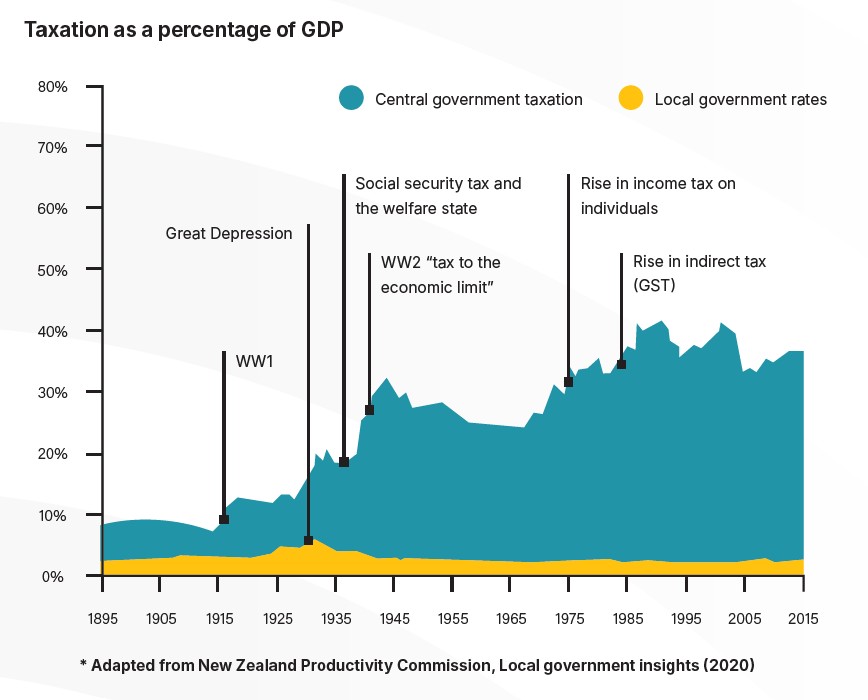
The reality is that most local government income comes from rates. Any reform needs to also provide new funding avenues from central Government to address New Zealand’s national infrastructure deficit and more fairly spread the tax take across communities.
Over the years, successive government reports have confirmed that local government funding and financing requires change. It simply is not sustainable to rely on rates alone.
Local government has been pushing for new tools such as the Crown paying rates for the services they use, as well as the GST charged on rates being returned to councils.
These alone would provide a huge relief to ratepayers while allowing Districts to thrive. The only requirement being that central Government pay for the services they use––just like households. The Government has committed to other new tools, including city and regional deals, GST sharing on new housing, and a Regional Infrastructure Fund.
However, we are yet to see how these could or will be applied to our District and what it will mean for ratepayers.
With such large-scale reform our concern is that any proposals could come at the expense of local accountability. One thing Council is certain of, and we have seen it with Three Waters reform, is that our communities are well informed.
Whatever change comes about, wholesale amalgamation is not something our Council supports, and we will work hard to make sure our community doesn’t lose the things that residents value.
Consultation has concluded
